


1C:ERP project review with an expert and 1C:ERP project manager
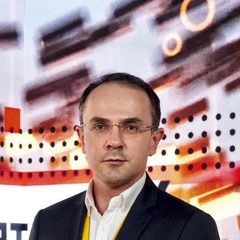
Let’s review your 1C:ERP project with an expert and 1C:ERP project manager
Migrating from 1C:UPP, a stalled implementation, doubts about your contractor, holding consolidation. In 30 minutes, I’ll look at your situation through the eyes of a project manager who runs these projects himself — and send you a next-steps plan you can show to the owner.
For manufacturing companies and holdings with revenue of RUB 600 million (≈ $6 million) or more — owners, CFOs, CIOs, and chief accountants.
If you don’t need an implementation partner, I’ll tell you so.
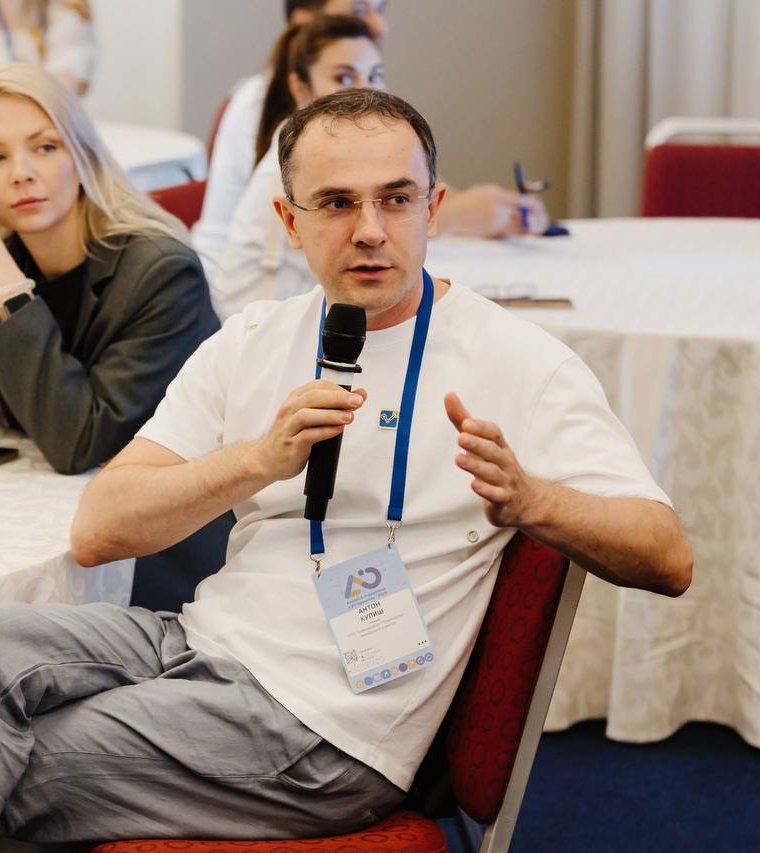



The migration from 1C:UPP should have started yesterday. As usual. We’ll make it — if we stick to the plan.
A full migration to 1C:ERP takes 7–15 months, so it can no longer be completed in full before the deadline. But you can migrate safely: first, whatever you need to file statutory reports, then everything else.
Choose your situation
This way I’ll know in advance what you’re coming with and prepare examples at your scale.
Go-live on January 1, and we’re just starting
Only a few months are left until the new year, and a typical 1C:ERP project takes about a year. It feels like there’s no way to make it.
We’re still on 1C:UPP
Support is ending, and the migration project hasn’t started yet or is just getting underway.
The project is underway but stalling
Deadlines have slipped, the budget keeps growing, and there’s no end in sight.
I have doubts about our contractor
I can’t tell whether the team is doing a good job or what I’m paying for.
Implemented, but it doesn’t work as it should
Costs don’t reconcile, planning lives in Excel, and people work in two systems.
Holding: consolidation and 1C:ERP.UH
We spend weeks compiling group reports manually.
A management question about the project
Who should lead the project on our side, how to motivate people, and how to avoid repeating other people’s mistakes.
Questions people bring to me
The answer for your company comes at the review. Here is what almost always holds true.
“We’re on 1C:UPP — will we manage to migrate before support ends?”Owner · CFO · Chief accountant
Not in full: a complete migration takes 7–15 months, and from April 1, 2027, there will be no 1C:UPP support at all. But you can migrate safely in stages: first statutory accounting from the start of the period so you don’t miss reporting deadlines, then warehouse, production, and management accounting.
At the review: a migration sequence tailored to your scale.
“The budget keeps growing — new hours every month”CFO · Owner
A growing budget is a symptom: customizations instead of out-of-the-box functionality, and no change control. What works is a stage-by-stage budget and a change log, where every change is estimated and approved before work starts, not after.
“They pitched stars, but juniors do the work”CIO
Key roles should be assigned by name in the contract, together with a replacement rule. And check who actually writes the technical specifications and runs meetings with your users.
“Costs in the ERP don’t add up — we calculate them in Excel”CFO · Chief accountant
Usually the problem is not the calculation but the source data: BOMs, consumption rates, routings, and overhead allocation. At the RubEx Group holding, the costing method was built on the out-of-the-box functionality of 1C:ERP.UH. You can’t find the error in the infobase in 30 minutes, but you can understand where to look.
I covered this in detail in the webinar “Costing and pricing in 1C:ERP”.
“Foremen don’t enter data — it’s sabotage”Production · Owner
People don’t sabotage the system; they sabotage extra work. What helps is a minimum of actions at the workstation, a clear “enter data — get value” link, and metrics that managers actually look at. Key users of the project need to be partially relieved of their day-to-day work, and project goals should be included in their KPIs.
“It takes us weeks to compile holding reports manually”CFO · Owner
The architecture has to be decided at the outset: 1C:ERP at the plants and 1C:ERP.UH for consolidation and budgeting — or a single infobase. This choice determines your budget for years to come.
“We need to go live on January 1. Can ERP realistically be implemented in 3 months?”Owner · CFO · CIO
Not in full in 3 months: a 1C:ERP project usually takes about 12 months. But we use AI tools at every stage — from business analysis and design to testing and data migration — and complete stages roughly twice as fast. So there is a chance to make it. And if the full scope won’t fit by January 1, we’ll propose a solution for your situation.
At the review: what you can realistically launch by January 1.
“They promised one year — we’re in year three. What’s going on?”Owner
Projects almost never stall because of 1C — they stall because of management. First, I look at three signs: whether the project scope and acceptance criteria are fixed, who makes decisions on your side, and how many questions have been left unanswered for more than two weeks.
“How can I tell if the contractor is doing a good job?”Owner · CFO
By three signs. You have the project documents in hand: the process model, technical specifications, and decision logs. You can see who on the team is doing what. Results are shown in regular live demos in the system, not just in reports. If you don’t have the documents, you already depend on the contractor.
“The system has been rewritten so heavily that we can’t update it”CIO · Chief accountant
Customizations should be made through extensions rather than by modifying the standard configuration, and every deviation from the standard should be justified. If the configuration has already been “taken off vendor support,” you can return to the standard gradually. The scope of this work can be estimated in advance.
“We bought planning, but the plan still lives in Excel”Production
Planning in ERP works only if your standards data (BOMs, routings, consumption rates) is of good quality. Start with the planning level your data can actually support, not with an operation-level schedule right away.
“Nobody runs the project on our side — everything comes down to me”Owner · CIO
The client-side project manager is a key role, and it doesn’t have to be the CIO. You need someone with the authority to make accounting decisions and with dedicated time for the project. Often it’s the CFO or their deputy.
“The previous contractor made a mess. How do we avoid a repeat?”Owner · CIO
Start not by choosing a new contractor but with a short audit: what to keep, what to redo, and which decisions were wrong. Otherwise the new contractor will go down the whole path again — at your expense.

I started as an analyst — so I see the project from the inside, not through presentations
Anton Kulish leads and oversees 1C:ERP and 1C:ERP.UH projects. He rose from developer and analyst to head of a project office, running several projects at once with a team of 100+ people. A technical education and research work before 1C taught him to calculate rather than take things on trust.
The scale I’ve worked at
KFC Russia
RubEx Group
Biofood (Big Lunch)
Also: PIK-Element — 1C:ERP go-live in assembly-line production (video case study), PetrozavodskMash — 1C:EAM (TOiR) in 2.5 months at an enterprise with 10,000+ employees, Techsnabexport (Rosatom group), Bashkirenergo.
AI handles the routine. Decisions and accountability stay with people
Most of the effort in 1C:ERP projects goes into documents: process procedures, technical specifications, user guides, and test scenarios. We prepare this part with AI assistants, while specialists review every document and are accountable for the result.
A review is real work, not a sales call
Questionnaire
Your situation, scale, and system. So that I come prepared instead of spending half the meeting on questions.
Video call
Written summary
Three risks, three next steps, and questions worth asking your contractor. You can forward it to colleagues — it’s yours to keep either way.
Don’t take my word for it — check for yourself
Awards, reference letters from people who have been in your shoes, and publications — all of it can be verified.
 Top award
1C:Project of the Year winner
Category: “Best 1C migration project.” Migration of Lab Industries (Henkel) from SAP to 1C:ERP.UH, with CIFP among the contractors.
View →
“IT Leaders for Industry”
Top 30 overall; 6th place in food industry, 13th in ERP, 4th in HRM.


Software import substitution projects
In the TAdviser ranking “Major software import substitution projects” (replacing foreign software): Lab Industries — 6th place and KFC (Unirest) — 9th (2022), LANIT — 17th (2023). CNews: 35th place in the HR Tech top 40.

Speaker and expert
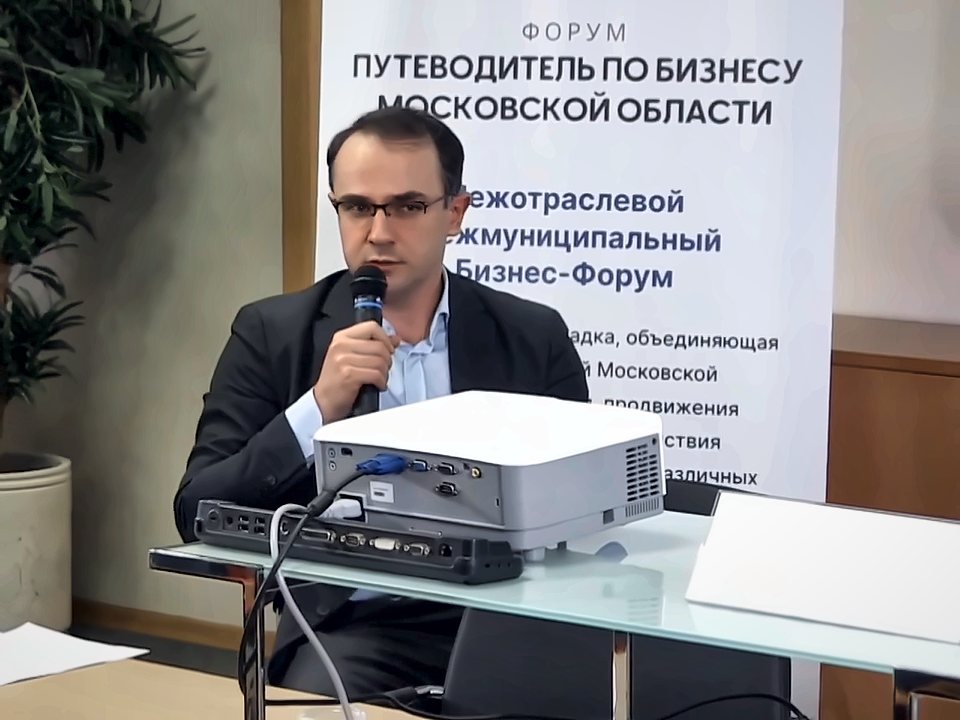
Diploma from PRO BIZNES TV (2025) and a letter of appreciation from the “Moscow Region Business Guide” business forum (2023).
View →Diplomas and letters of appreciation
Hover to see the original; click to open the diploma in a larger view.




At industry events
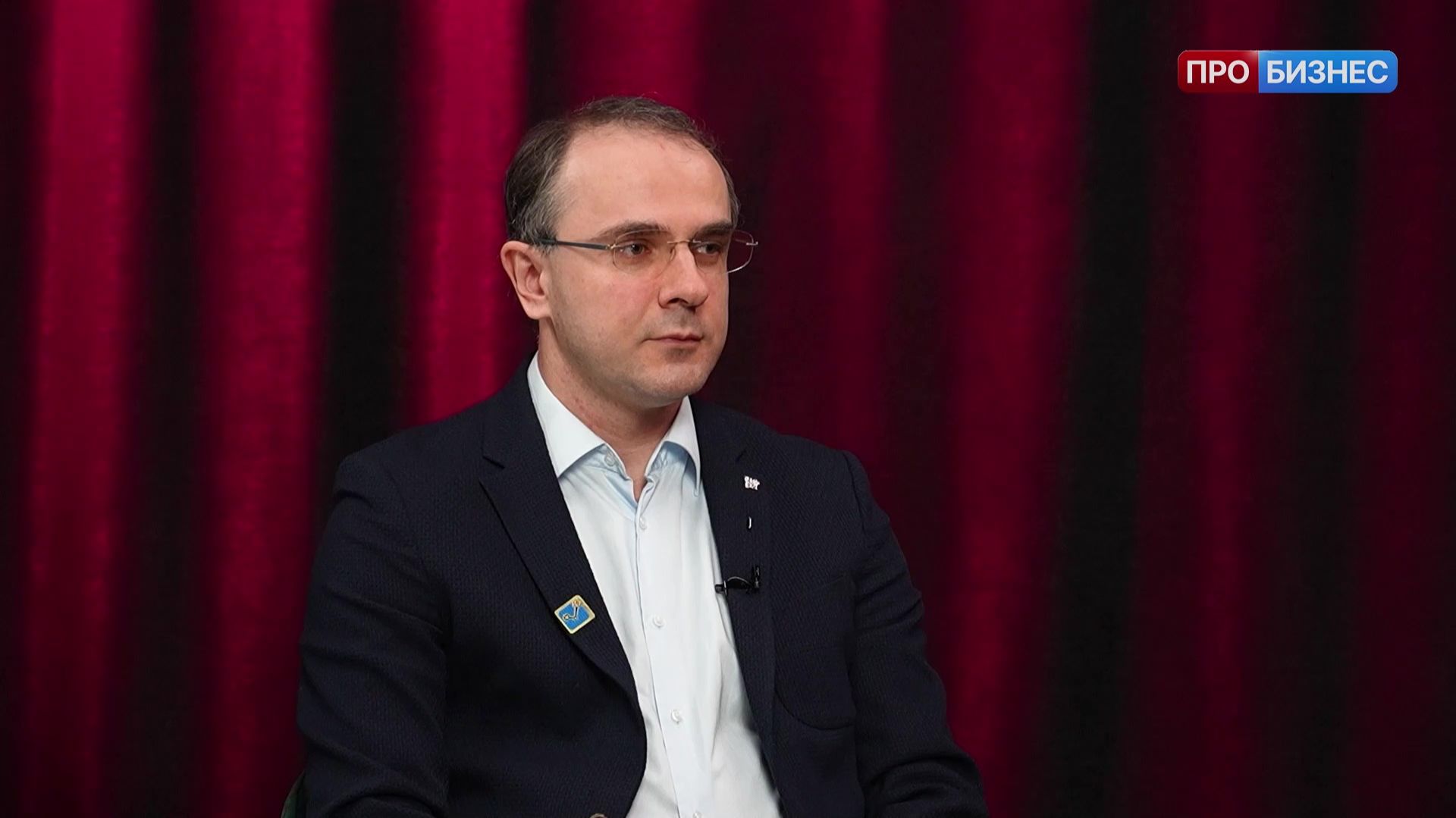
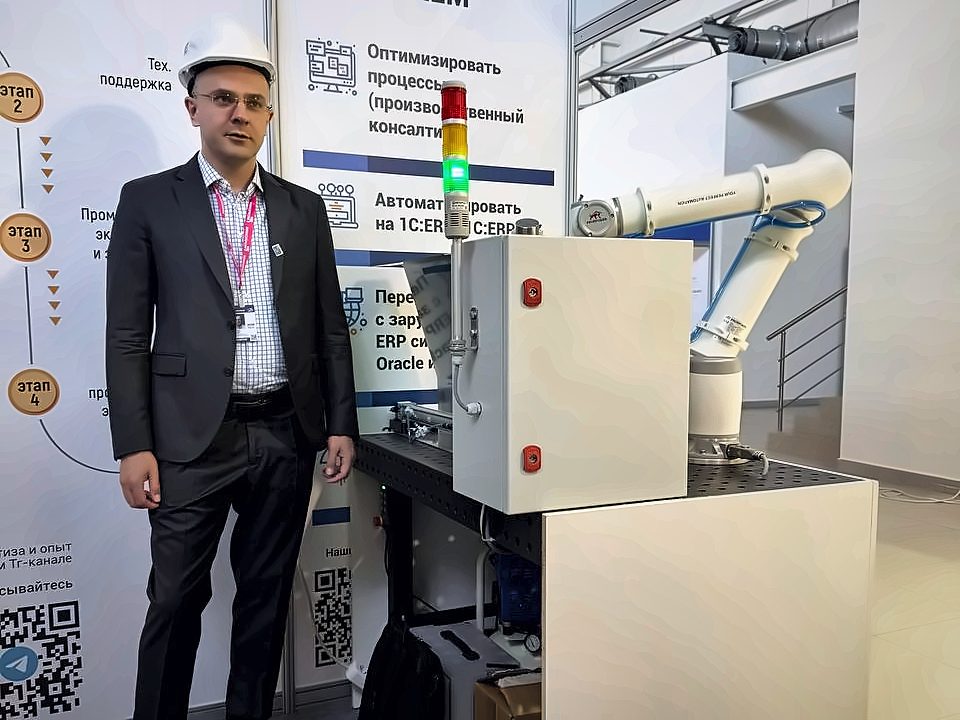
“Technologies for Business”: interview with Anton Kulish
Why move to ERP and what problems it solves, how to assess the impact of an implementation, what issues arise during automation, and why industry specifics matter.
Host: Valentina Shelkovnikova. 26 minutes.
Open on Rutube →
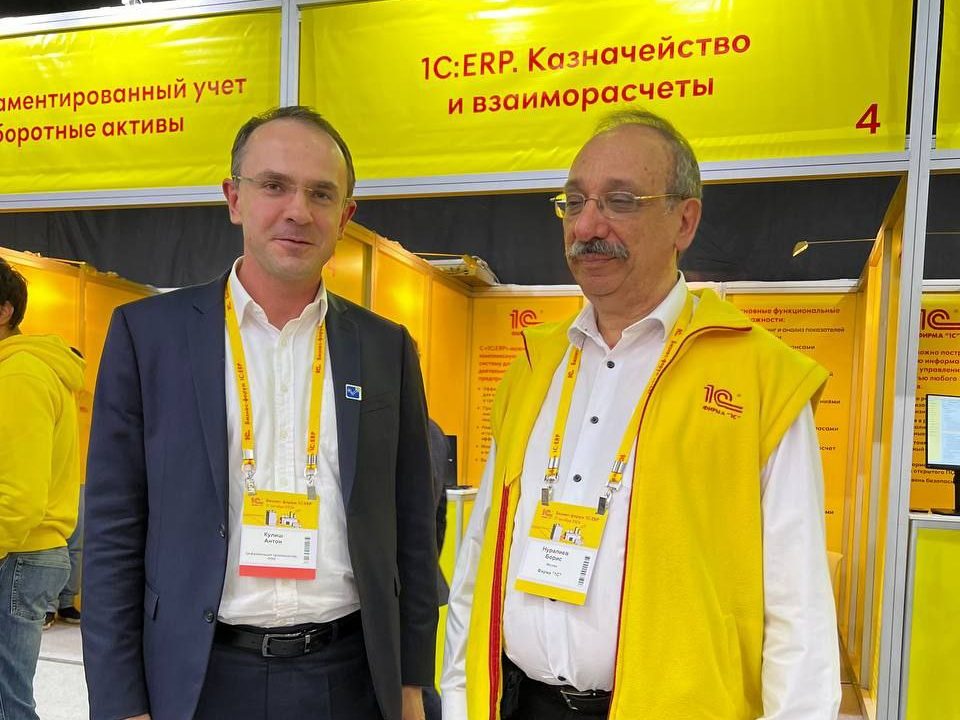
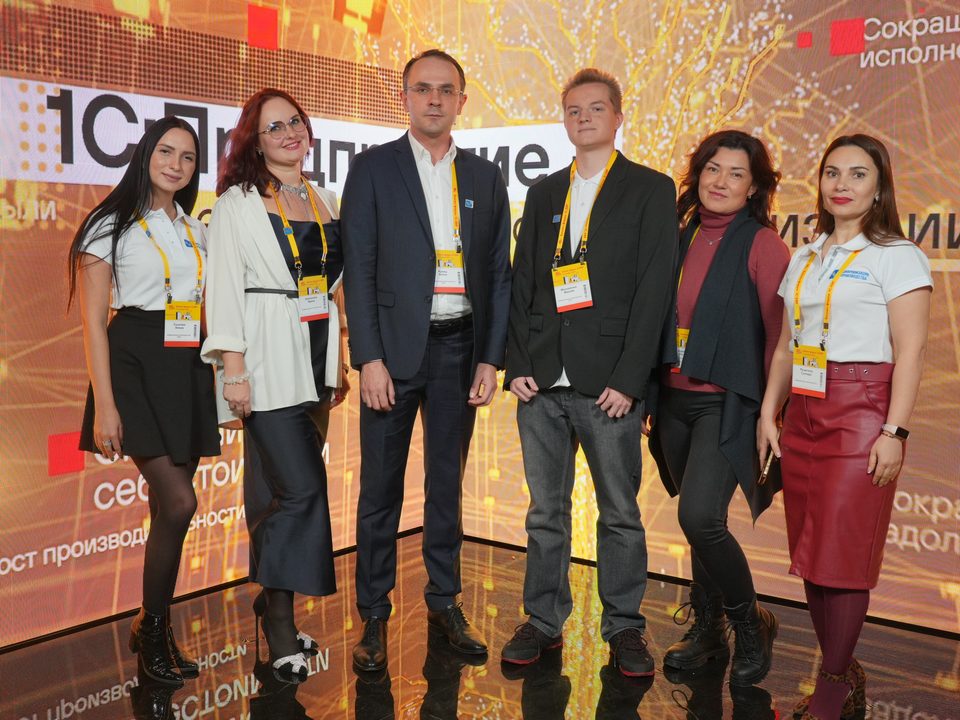

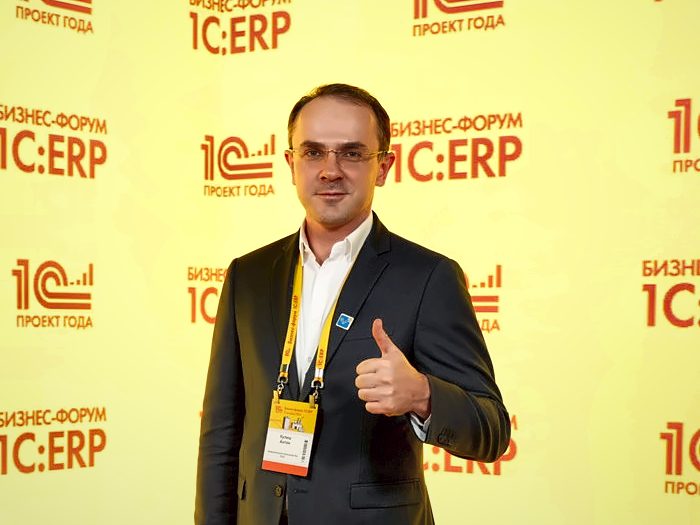
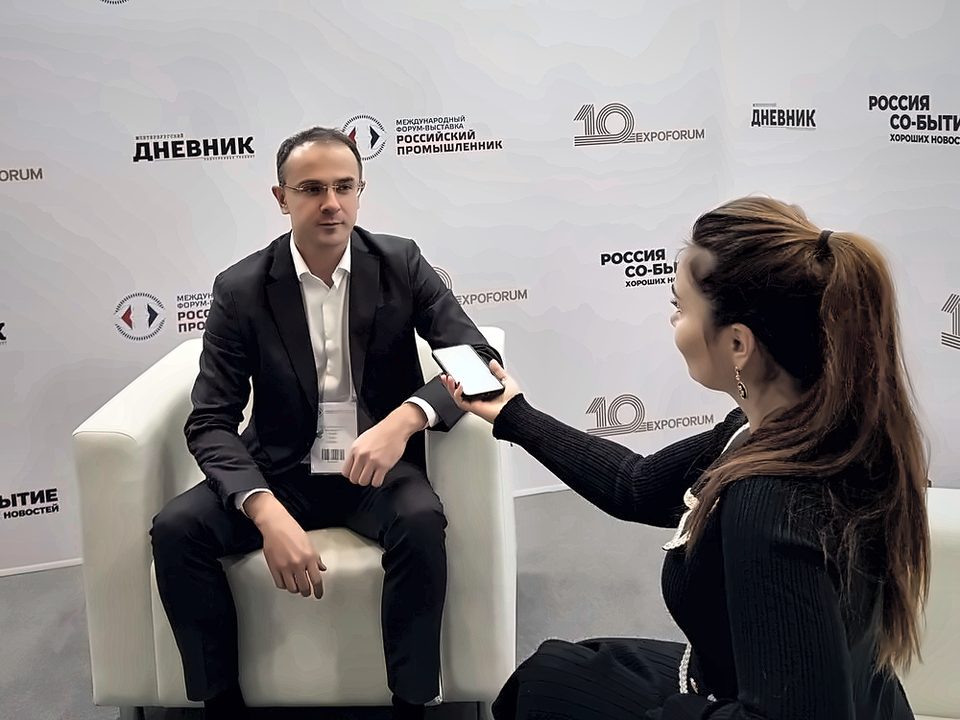
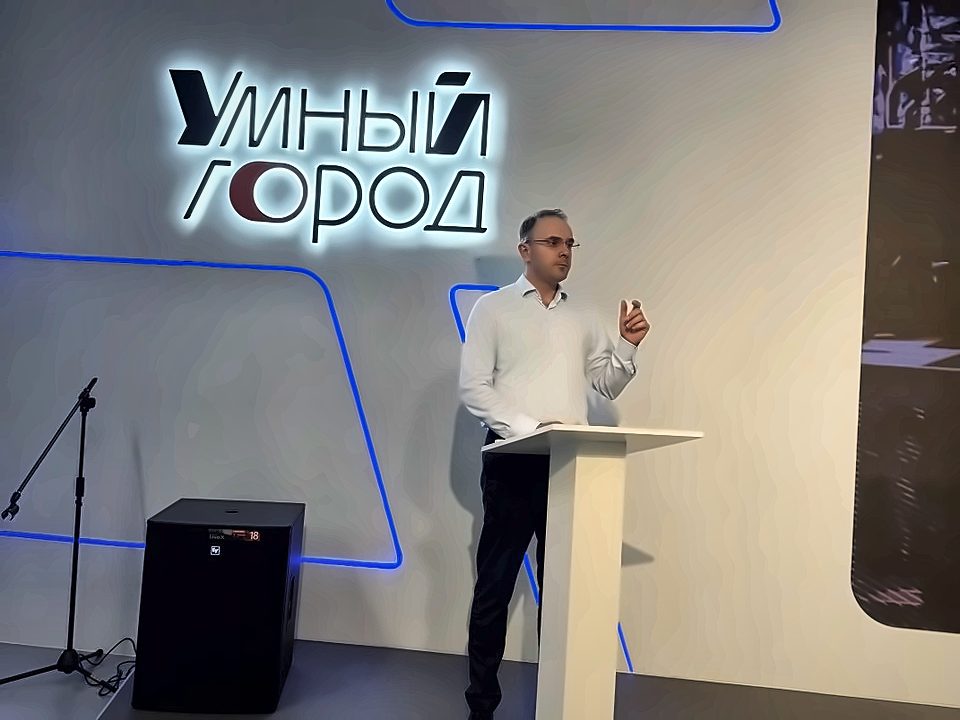
Client testimonials
All tasks assigned to the contractor were completed.
A holding company’s migration from 1C:UPP to 1C:ERP.UH due to the end of support for 1C:UPP: two plants, 400 planned user seats. Anton is the project supervisor.
 Signed letter →
…a responsible approach to the tasks at hand, initiative in developing solutions, and the team’s extensive expertise.
1C:ERP at an assembly-line plant producing prefabricated bathroom pods, go-live in January 2019. The project was led by Anton, then at ITB Consulting.
 Signed letter →
We would like to express special thanks to consultant… Anton Sergeyevich Kulish for resolving the issues that arose promptly, thoroughly, and professionally.
Implementation of 1C:ERP Rosatom edition; the system has been put into full production use.
 Signed letter →
Thank you to Anton Sergeyevich Kulish for his desire to get to the bottom of the problem, his dedication, and his incredible patience.
Automation of bank guarantee accounting: two complex reports and a configuration customization.
 Signed letter →
He demonstrated excellent analytical skills and initiative in developing and agreeing on technical specifications.
Implementation of 1C:MDM and user training; the system has been put into full production use.
 Signed letter →
Talk to a client directly
On request, I’ll connect you with the client-side project manager at a company of similar size — after the review, if you decide to move forward.
Quotes are taken from reference letters on company letterhead. Click the letter below a testimonial to view the signed scan.
Publications and talks
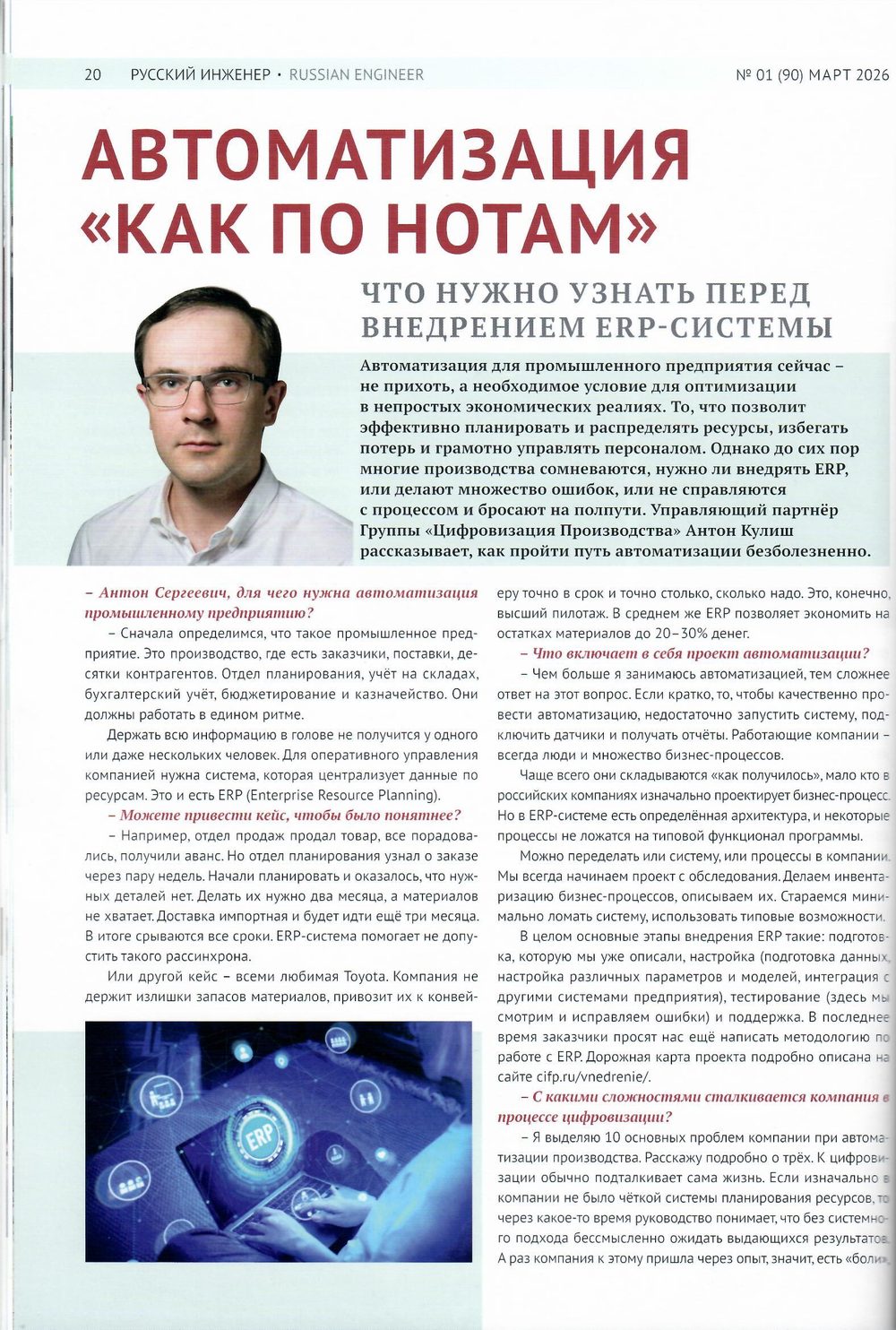
Company profiles: TAdviser · ADPASS · all publications on cifp.ru
Book a project review
The questionnaire helps ensure that consultations go to those they will genuinely help. Thank you for taking two minutes to fill it out.
An honest look at what usually holds people back
Why do I need a consultant if I have a CIO?
I don’t replace your CIO. I offer an independent perspective that helps them make the case for decisions to senior management. Often the two of you come to the review together.
Free — so you’ll try to sell me something?
I don’t sell licenses. If you need help after the review, I’ll offer it. If you don’t, I’ll tell you so. Either way, the summary is yours to keep.
We already have a contractor
A second opinion doesn’t mean switching contractors. More often, it’s a way to get the project back on schedule and ask your contractor the right questions.
What about confidentiality?
The review doesn’t require access to your infobase. If needed, we’ll sign an NDA before the meeting.
All integrators are the same
Maybe. That’s why you’ll be talking not to a sales manager but to a project manager who has personally led implementations for 18 years.
Our revenue is under RUB 600 million (≈ $6 million)
The review is designed for mid-sized and large businesses. If your company is smaller, fill out the questionnaire anyway: I’ll point you in the right direction or suggest a different format.
In 30 minutes, you’ll know what to do next with your project
Migrating from 1C:UPP, a stalled implementation, or choosing a contractor — we’ll go through your situation, and within 24 hours I’ll send you a written plan: key risks, options, and the next step. The decision is yours.