Where machine time goes while a setup technician hunts for the right tooling
08.09.2026
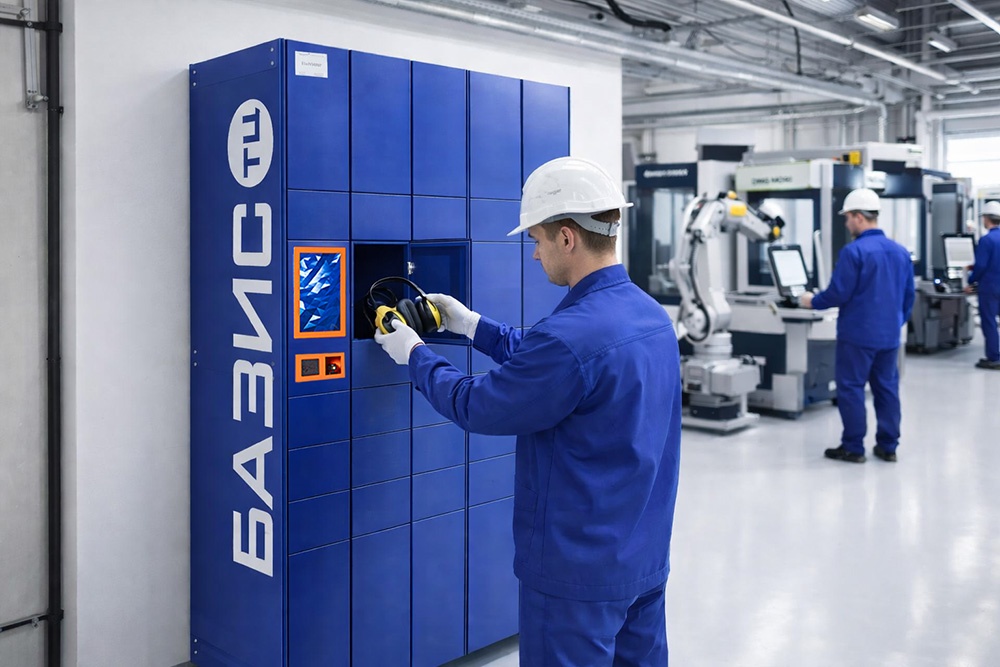
Here is a simple test for any production director: how many times per shift does a setup technician or operator leave the work area to go to a distant storeroom for tooling, fixtures, or measuring instruments — and how long does the machine sit idle in the meantime? If there is no precise answer, the problem is most likely not employee discipline but the fact that the company’s tool and tooling tracking is not connected to production planning in any way. At first glance, the problem seems minor and “not an ERP issue”: the storeroom, tooling, tools, someone did not return something. In practice, it directly hits order lead times and production costs: time spent searching for and waiting for tooling is not recorded anywhere, and disputes over “who took it and didn’t bring it back” eat up foremen’s time and often end with an unplanned purchase of a duplicate expensive tool.A modular cabinet for storing and issuing tooling — an example of a solution from our partner TC Bazis. Physical storage like this works well together with tool tracking in 1C:ERP.
Why this is not just a matter of keeping the storeroom in order
Tool and tooling tracking is rarely seen as part of production management — it is usually the responsibility of the tool department, which operates separately from the planning system. The result is a gap: a production order knows exactly what needs to be made and by when, but not whether the work area has the tooling it needs right now. This gap creates three specific sources of loss.
Equipment downtime — the time a setup technician spends finding and collecting tooling is not recorded anywhere and is left out of the analysis of why deadlines are missed.
Losses and disputes over responsibility — without assigning tools to a specific employee or operation, there is no quick way to find out who took what and when, which leads to conflicts and unnecessary purchases.
No consumption standards — without limits and stock control, the company either overbuys tools “just in case” or regularly runs short of them at the worst possible moment.
What to do: link tool tracking to the production order
The solution is not to tidy up the tooling storeroom in isolation from the rest of the system but to build it into the same environment where production planning already lives — that is, 1C:ERP. The logic is simple: if the system already knows which operation is scheduled and when, it can also know which tooling that operation needs and where it is. In practice, this means several specific things.
A tool kit is assigned to a specific production operation — the worker receives the full set at once instead of assembling it from memory at the storeroom.
Every issue and return is recorded against the employee and the operation — “who took it and didn’t bring it back” is no longer a matter of dispute, because the answer is always in the system.
Consumption rates and minimum stock levels are set for tools — the system itself flags when stock falls below the threshold or an employee exceeds their limit, without waiting for month-end results.
The movement history of each item — from whom, to whom, and when — builds up automatically and is available as a regular report rather than a manual register in Excel or a paper logbook.
Why this matters to the director, not just the storekeeper
For the production director, the value here is not an orderly tooling storeroom as such but the fact that time spent looking for tools stops being an invisible part of the production cycle. Once issues and returns are tied to the operation and the order, this data becomes part of the same analysis as the rest of production planning: you can see where time is actually lost, not just where it “seems to be lost.” The separate physical question of what storage equipment to use — ordinary shelving, access-controlled cabinets, or something else — is secondary and is decided based on the specific item range and budget. What comes first is that this tooling must be tracked in the same system as production orders, not in a standalone warehouse application with no connection to the rest of enterprise management.
Where to start
If your tooling and tool tracking currently relies on a paper logbook, the storekeeper’s memory, or a separate program not linked to production planning, it is the same kind of gap we discussed in our articles on production planning and on migrating to 1C:ERP: the system seems to work, but each such area gradually eats up time and money that never show up in the reports. We can look at how tooling and tool tracking works in your company and show you how it would look in a single 1C:ERP environment — without a separate paper logbook or manual reconciliations. Request demo access or an audit on our website.